The city before the mosque
Roman building stood on this part of old Aleppo, and the city's cathedral stood beside it.
Al-Walid I begins the building
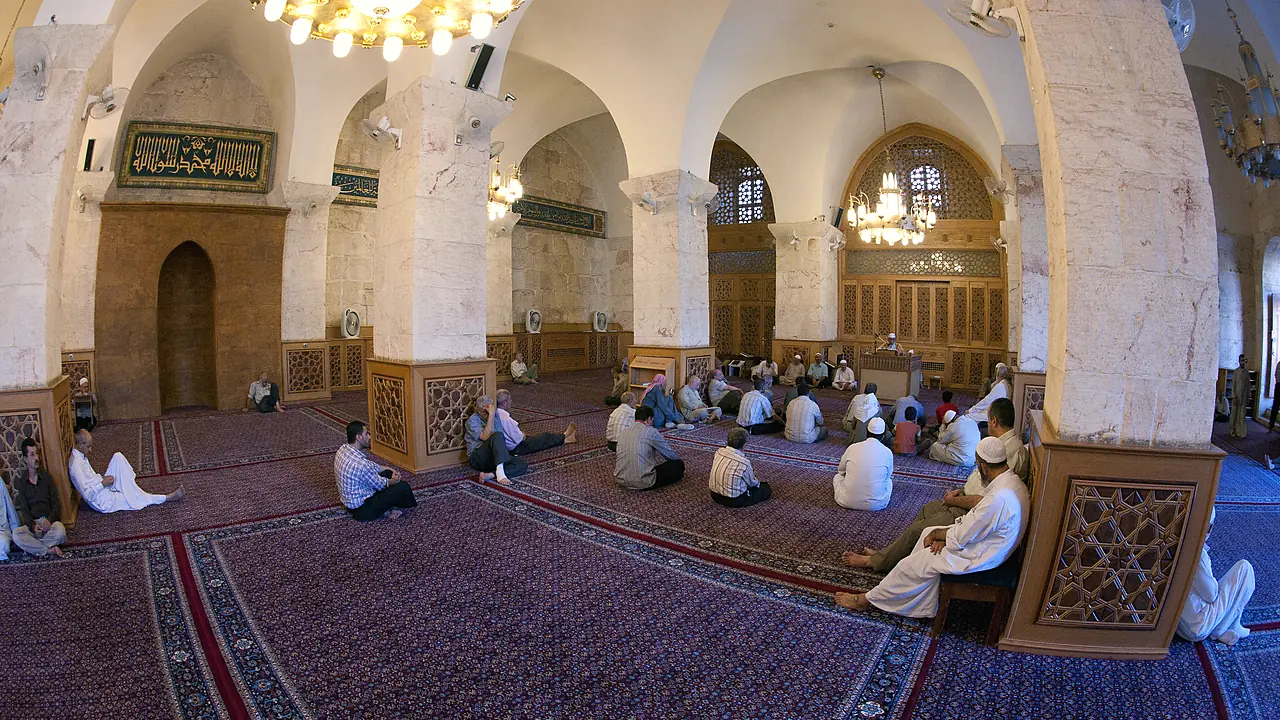
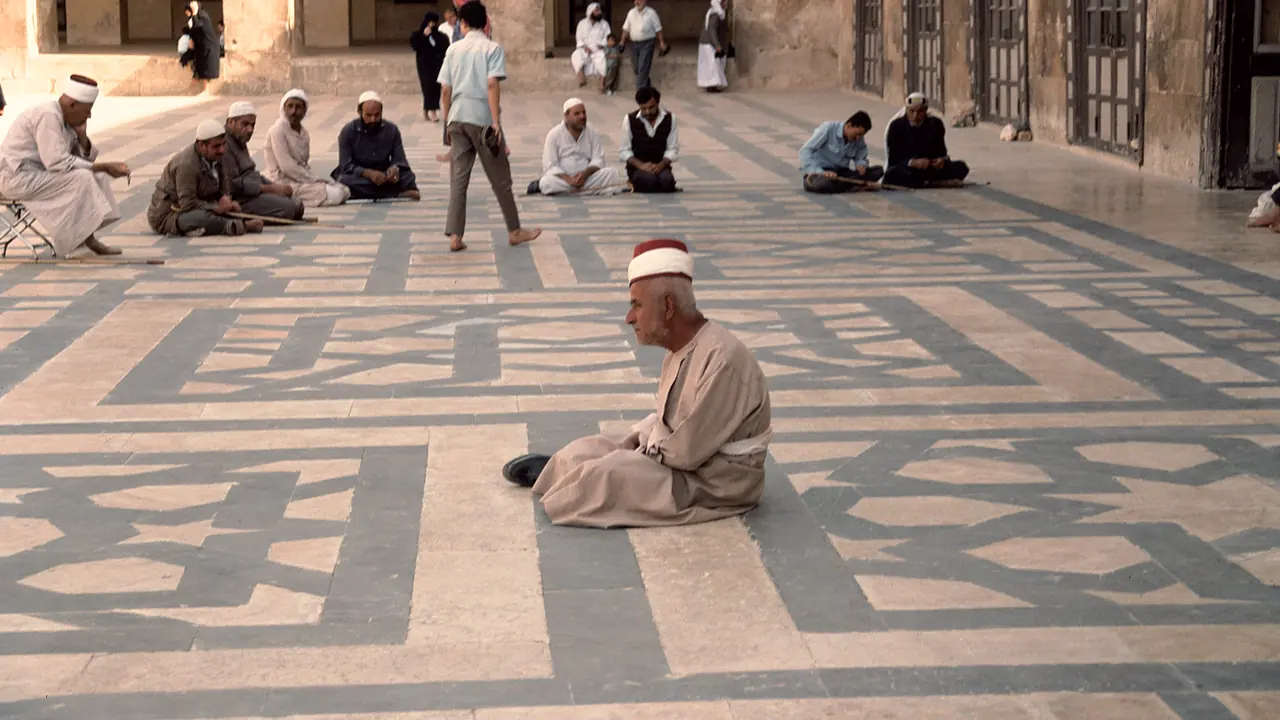
Ten years after the Umayyad Mosque of Damascus, the Umayyad caliph al-Walid begins the great mosque of Aleppo, intended to equal it.
Sulayman finishes it
Al-Walid dies before the work is done; his brother and successor Sulayman completes it.
The minaret is renewed
At the order of the qadi of Aleppo, Ibn al-Khashshab, and built by the architect Hasan ibn Mufarraj al-Sarmani: forty-five metres in six storeys, banded with inscription, ornament and muqarnas.
Nur al-Din rebuilds the mosque
The mosque burns and Nur al-Din rebuilds it. Sources give 1158 and 1169; we have not chosen between them.
Damage, then repair
The mosque is damaged in the Mongol invasion, and parts of it rebuilt afterwards.
Centuries of intervention
Successive Mamluk and then Ottoman additions and repairs.
The Ancient City of Aleppo
The Ancient City of Aleppo is inscribed on the UNESCO World Heritage List, with the mosque at its heart.
The mosque on the front line
The mosque lies in the zone of fighting and is extensively damaged.
The minaret falls
The minaret of 1090 collapses into roughly two thousand pieces. The event and its condition are recorded here; the cause is not attributed.
Aleppo moves to the Danger list
The Ancient City of Aleppo is placed, with the rest of Syria's World Heritage sites, on the List of World Heritage in Danger.
Awqaf resumes the work
Restoration resumes at the mosque, and the minaret's stones are gathered, sorted and tested in preparation for raising it again.
The work is under way
The minaret stands as far as the level of the spiral staircase, in its own original stone. No completion date has been announced.