01The project
This site is published under the authority of the Ministry of Awqaf, the Directorate-General of Antiquities and Museums, and the Ministry of Tourism.
It is part of Touristech — a JCI Beroea initiative for the digitisation of Syrian heritage — and it was developed by Raizer.
02How it handles what it does not know
Anything marked with a dashed rule is a value we do not yet have. We publish the empty field rather than a plausible guess, because on a site carrying a ministry's name an invented figure that looks like a fact is worse than no figure at all.
Where the accounts differ, the page says they differ rather than choosing the easier one.
03The photographs
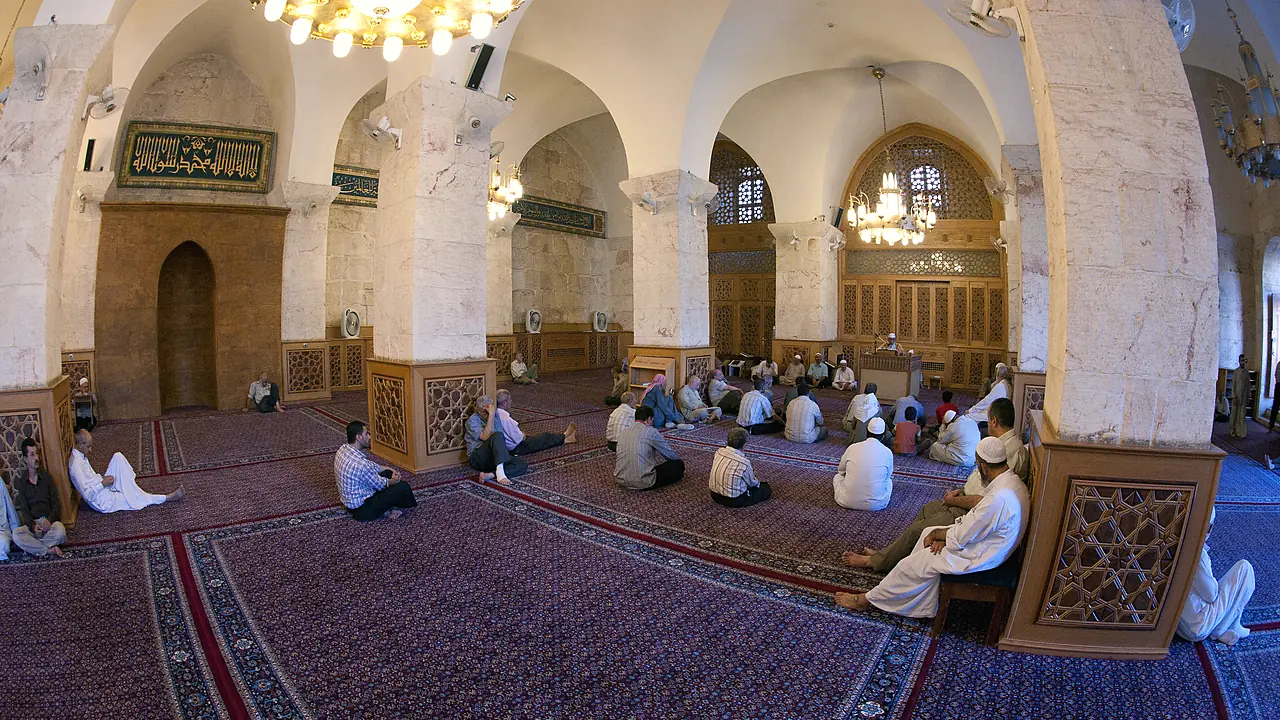
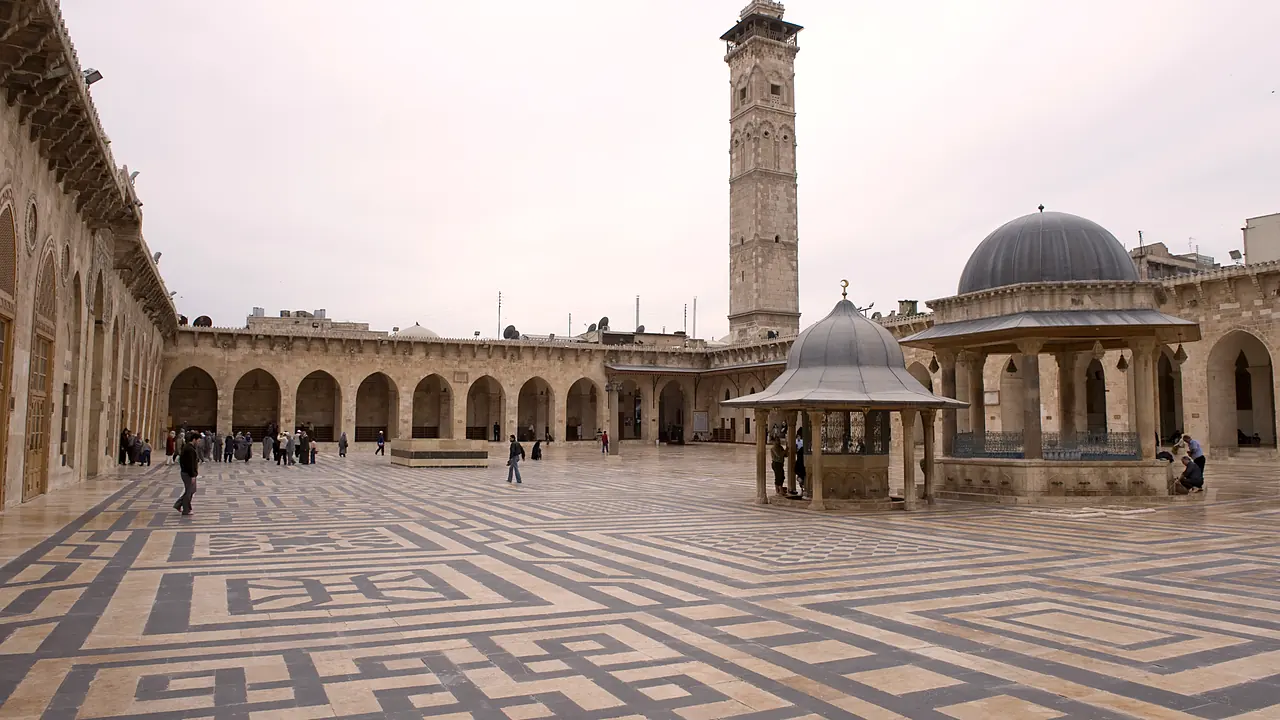
Every photograph on this site carries the year it was taken, inside its caption. The reason is that the mosque has been through destruction and rebuilding, and the photography available here predates that: anyone looking is entitled to know they are looking at 2009 and not at today.
04Facts held open
Sources give 1158 and 1169, some describing 1169 as following a fire. We have not chosen between them.
Appears as both Abu al-Qasim and Abu al-Hasan: Muhammad ibn Yahya ibn al-Khashshab.
al-Sarmani or al-Sarmini.
The inscription says the structure was renewed, so an earlier minaret existed. What it was, and why it went, is not established here.
About one hundred and seventy-four — a single source.
A received tradition about the ground before the mosque; it needs a firmer source.
The accounts conflict. The date, the loss and the condition are recorded; the cause is not attributed.
No date has been announced.
05Corrections
If something here is wrong, tell us and we will fix it and say that we did. That applies particularly to those who know the mosque closely, and to those who serve it.